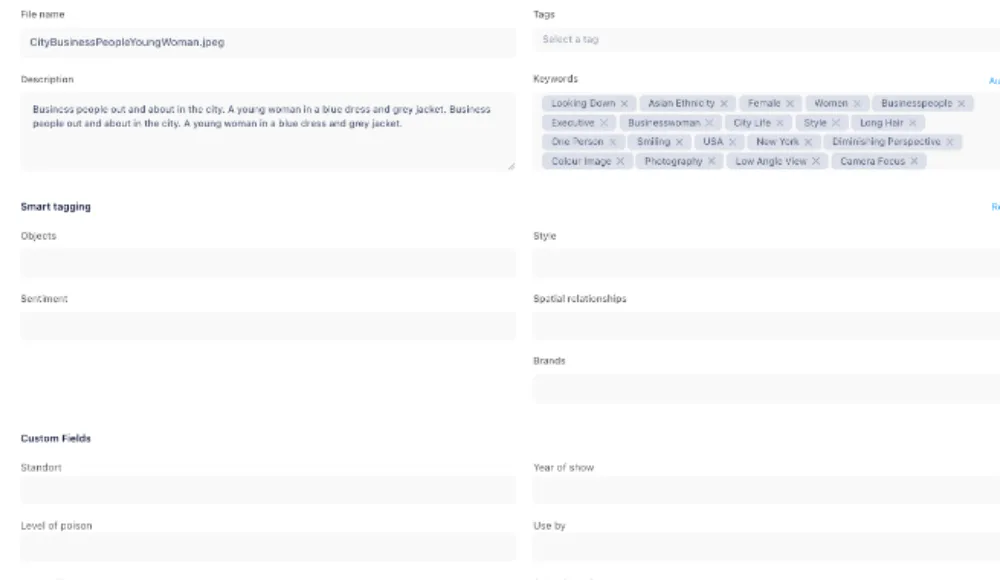
Metadata Debt Is Killing Your DAM: A Practical Metadata Strategy for Marketing Teams

If your team says "we have a DAM but nobody can find anything," you do not have a DAM problem. You have a metadata problem. A real DAM metadata strategy decides whether your library works like a search engine or like a junk drawer.
Metadata debt is missing, inconsistent, or wrong metadata that compounds every week. It slows campaign execution, increases rights risk, and erodes trust in your DAM.
This is why mature teams treat metadata as operational infrastructure. You can see similar failure patterns in Google Drive vs DAM environments where scale outpaced governance.
The practical 30 day reset
- Assign one metadata owner.
- Set 6 to 8 required governance fields.
- Standardize naming patterns.
- Use controlled values for key filters.
- Bind rights metadata to expiry alerts.
- Create upload templates by team.
- Clean active assets first.
- Train with real files.
- Track search success and retrieval time.
- Embed standards in onboarding.
Detailed operating playbook
Week one starts with scope control and role clarity. The metadata owner publishes the minimum field model and freezes taxonomy changes. Marketing ops audits active campaigns and prioritizes assets by business impact. Upload templates are configured for social, ecommerce, and regional workflows. Templates prefill campaign code, channel, region, and approval state. Rights metadata is mandatory for licensed content. Assets missing rights fields are routed to review. Teams run search tests based on real campaign tasks. Search success on first attempt is tracked against baseline. Ambiguous values are removed from controlled vocabularies. Onboarding checklists are updated with metadata requirements. Campaign launch templates include mandatory metadata gates. Executive reporting connects metadata quality to campaign speed. Legal reporting tracks expired asset blocks and renewal windows. Agency access is structured with validation rules. Weekly office hours resolve edge cases without schema sprawl. AI tags map to approved vocabularies instead of free text. New fields require measurable retrieval or compliance benefit. The smallest enforceable model outperforms complex schemas. Consistent metadata creates compounding operational advantage. Week one starts with scope control and role clarity. The metadata owner publishes the minimum field model and freezes taxonomy changes. Marketing ops audits active campaigns and prioritizes assets by business impact. Upload templates are configured for social, ecommerce, and regional workflows. Templates prefill campaign code, channel, region, and approval state. Rights metadata is mandatory for licensed content. Assets missing rights fields are routed to review. Teams run search tests based on real campaign tasks. Search success on first attempt is tracked against baseline. Ambiguous values are removed from controlled vocabularies. Onboarding checklists are updated with metadata requirements. Campaign launch templates include mandatory metadata gates. Executive reporting connects metadata quality to campaign speed. Legal reporting tracks expired asset blocks and renewal windows. Agency access is structured with validation rules. Weekly office hours resolve edge cases without schema sprawl. AI tags map to approved vocabularies instead of free text. New fields require measurable retrieval or compliance benefit. The smallest enforceable model outperforms complex schemas. Consistent metadata creates compounding operational advantage. Week one starts with scope control and role clarity. The metadata owner publishes the minimum field model and freezes taxonomy changes. Marketing ops audits active campaigns and prioritizes assets by business impact. Upload templates are configured for social, ecommerce, and regional workflows. Templates prefill campaign code, channel, region, and approval state. Rights metadata is mandatory for licensed content. Assets missing rights fields are routed to review. Teams run search tests based on real campaign tasks. Search success on first attempt is tracked against baseline. Ambiguous values are removed from controlled vocabularies. Onboarding checklists are updated with metadata requirements. Campaign launch templates include mandatory metadata gates. Executive reporting connects metadata quality to campaign speed. Legal reporting tracks expired asset blocks and renewal windows. Agency access is structured with validation rules. Weekly office hours resolve edge cases without schema sprawl. AI tags map to approved vocabularies instead of free text. New fields require measurable retrieval or compliance benefit. The smallest enforceable model outperforms complex schemas. Consistent metadata creates compounding operational advantage. Week one starts with scope control and role clarity. The metadata owner publishes the minimum field model and freezes taxonomy changes. Marketing ops audits active campaigns and prioritizes assets by business impact. Upload templates are configured for social, ecommerce, and regional workflows. Templates prefill campaign code, channel, region, and approval state. Rights metadata is mandatory for licensed content. Assets missing rights fields are routed to review. Teams run search tests based on real campaign tasks. Search success on first attempt is tracked against baseline. Ambiguous values are removed from controlled vocabularies. Onboarding checklists are updated with metadata requirements. Campaign launch templates include mandatory metadata gates. Executive reporting connects metadata quality to campaign speed. Legal reporting tracks expired asset blocks and renewal windows. Agency access is structured with validation rules. Weekly office hours resolve edge cases without schema sprawl. AI tags map to approved vocabularies instead of free text. New fields require measurable retrieval or compliance benefit. The smallest enforceable model outperforms complex schemas. Consistent metadata creates compounding operational advantage.
Week one starts with scope control and role clarity. The metadata owner publishes the minimum field model and freezes taxonomy changes. Marketing ops audits active campaigns and prioritizes assets by business impact. Upload templates are configured for social, ecommerce, and regional workflows. Templates prefill campaign code, channel, region, and approval state. Rights metadata is mandatory for licensed content. Assets missing rights fields are routed to review. Teams run search tests based on real campaign tasks. Search success on first attempt is tracked against baseline. Ambiguous values are removed from controlled vocabularies. Onboarding checklists are updated with metadata requirements. Campaign launch templates include mandatory metadata gates. Executive reporting connects metadata quality to campaign speed. Legal reporting tracks expired asset blocks and renewal windows. Agency access is structured with validation rules. Weekly office hours resolve edge cases without schema sprawl. AI tags map to approved vocabularies instead of free text. New fields require measurable retrieval or compliance benefit. The smallest enforceable model outperforms complex schemas. Consistent metadata creates compounding operational advantage. Week one starts with scope control and role clarity. The metadata owner publishes the minimum field model and freezes taxonomy changes. Marketing ops audits active campaigns and prioritizes assets by business impact. Upload templates are configured for social, ecommerce, and regional workflows. Templates prefill campaign code, channel, region, and approval state. Rights metadata is mandatory for licensed content. Assets missing rights fields are routed to review. Teams run search tests based on real campaign tasks. Search success on first attempt is tracked against baseline. Ambiguous values are removed from controlled vocabularies. Onboarding checklists are updated with metadata requirements. Campaign launch templates include mandatory metadata gates. Executive reporting connects metadata quality to campaign speed. Legal reporting tracks expired asset blocks and renewal windows. Agency access is structured with validation rules. Weekly office hours resolve edge cases without schema sprawl. AI tags map to approved vocabularies instead of free text. New fields require measurable retrieval or compliance benefit. The smallest enforceable model outperforms complex schemas. Consistent metadata creates compounding operational advantage. Week one starts with scope control and role clarity. The metadata owner publishes the minimum field model and freezes taxonomy changes. Marketing ops audits active campaigns and prioritizes assets by business impact. Upload templates are configured for social, ecommerce, and regional workflows. Templates prefill campaign code, channel, region, and approval state. Rights metadata is mandatory for licensed content. Assets missing rights fields are routed to review. Teams run search tests based on real campaign tasks. Search success on first attempt is tracked against baseline. Ambiguous values are removed from controlled vocabularies. Onboarding checklists are updated with metadata requirements. Campaign launch templates include mandatory metadata gates. Executive reporting connects metadata quality to campaign speed. Legal reporting tracks expired asset blocks and renewal windows. Agency access is structured with validation rules. Weekly office hours resolve edge cases without schema sprawl. AI tags map to approved vocabularies instead of free text. New fields require measurable retrieval or compliance benefit. The smallest enforceable model outperforms complex schemas. Consistent metadata creates compounding operational advantage. Week one starts with scope control and role clarity. The metadata owner publishes the minimum field model and freezes taxonomy changes. Marketing ops audits active campaigns and prioritizes assets by business impact. Upload templates are configured for social, ecommerce, and regional workflows. Templates prefill campaign code, channel, region, and approval state. Rights metadata is mandatory for licensed content. Assets missing rights fields are routed to review. Teams run search tests based on real campaign tasks. Search success on first attempt is tracked against baseline. Ambiguous values are removed from controlled vocabularies. Onboarding checklists are updated with metadata requirements. Campaign launch templates include mandatory metadata gates. Executive reporting connects metadata quality to campaign speed. Legal reporting tracks expired asset blocks and renewal windows. Agency access is structured with validation rules. Weekly office hours resolve edge cases without schema sprawl. AI tags map to approved vocabularies instead of free text. New fields require measurable retrieval or compliance benefit. The smallest enforceable model outperforms complex schemas. Consistent metadata creates compounding operational advantage.
AI tagging and governance
AI tagging should enrich descriptive context while legal and approval fields remain controlled. Map AI suggestions to approved values, review low confidence tags, and block ad hoc governance terms.
Align rollout scope with platform capability. Review pricing and features before implementation commitments.

Final take
A DAM without metadata discipline is expensive storage. A DAM with clear standards is a reliable execution layer for marketing. If you want that model, start free with Razuna.
For more on metadata maintenance and tagging, see Metadata Debt in DAM: Why Marketing Teams Keep Losing Assets They Already Own and AI Auto-Tagging for Digital Assets: Stop Wasting Time on Manual Metadata.