Direct Access File Organization: Advantages and Disadvantages
If you have ever worked with databases or file systems, you may have come across the term direct access file organization. It describes a way of storing and retrieving records where you can go straight to any record without reading through all the ones before it. That sounds ideal at first glance, and in many situations it is. But like any storage method, it comes with trade-offs that matter when you are designing a system or evaluating options for your team.
This guide breaks down what direct access file organization actually means, how it works, its key advantages, where it falls short, and how modern digital asset management systems have built on these principles to handle the scale and complexity that teams deal with today.
What Is Direct Access File Organization?
Direct access file organization, also called random access or relative file organization, stores records in a way that allows the system to jump directly to any record using a calculated address or key. The address is typically derived through a hashing function applied to a unique key value, such as a customer ID or product code.
Compare this with sequential file organization, where records are stored one after another and retrieval means starting from the beginning every time. With direct access, the system computes where a record lives and reads it in a single step, regardless of how many other records exist.
This approach is used extensively in relational databases, file systems on SSDs and HDDs, and systems that need real-time data access. ATMs, airline reservation systems, and inventory tracking platforms all rely on direct access to function at the speed users expect.
How Direct Access File Organization Works
The core mechanism is address calculation. When you store a record, the system applies a hashing algorithm to the record key to produce a physical storage location. When you want to retrieve that record, the same algorithm runs again on the key to find where the data lives.
For example, if your key is an employee ID of 1042, the hash function might map that to storage block 87. The system goes directly to block 87 and retrieves the record. No scanning, no sequential reads.
One challenge in this design is collisions, situations where two different keys hash to the same location. Systems handle this through overflow areas, chaining, or probing techniques. Good hash function design minimizes collisions, but no approach eliminates them entirely.
Advantages of Direct Access File Organization
Fast retrieval
This is the defining benefit. You do not have to scan through records in sequence. A single address lookup delivers the record you need. For applications that serve thousands of requests per second, this speed difference is the entire architecture decision.
No requirement to read in order
Sequential file systems require you to process records in the order they were stored. Direct access removes this constraint. You can jump to record 5,000 without touching records 1 through 4,999. This flexibility is essential for interactive systems where users are querying specific items, not processing batches.
Simultaneous access support
Because records do not depend on a sequential read order, multiple users or processes can access different records at the same time. This makes direct access file organization well-suited for multi-user environments such as banking systems, reservation platforms, and content management platforms.
Efficient updates
Updating a record in a sequential file often means rewriting a large portion of the file. With direct access, you overwrite only the specific block that contains the record you want to update. This reduces write amplification and keeps update latency low.
Disadvantages of Direct Access File Organization
Storage space inefficiency
To allow any address to be valid, the storage space must be pre-allocated across the full address range. If you allocate space for 100,000 records but only use 60,000, the remaining 40,000 slots consume storage while sitting empty. This is called internal fragmentation and it can inflate storage costs significantly.
Hash collisions
Even the best hashing algorithms produce collisions under certain conditions. When two keys map to the same address, the system must apply a resolution strategy, which adds complexity and can slow retrieval in high-collision scenarios. Poorly designed hash functions compound this problem.
Not suitable for sequential processing
If your use case requires processing all records in a specific order, such as generating a payroll file sorted by department, direct access organization is awkward and inefficient. The records are not stored in logical sequence, so generating sorted output requires reading all records and sorting them in memory or a temporary file.
Complex implementation
Designing a good hashing scheme requires expertise. Choosing the wrong hash function, allocating the wrong address space size, or mishandling overflow conditions all degrade performance. Maintenance of direct access systems demands more specialized knowledge than sequential file maintenance.
No range query support without indexes
Hashing is designed for exact-match lookups. If you need to find all records where a field falls within a range, such as all orders placed in April, a pure direct access file gives you no efficient path. You either scan everything or layer an index structure on top.
Direct Access vs Other File Organization Methods
Understanding direct access becomes clearer when you compare it with the alternatives.
Sequential file organization stores records in order of arrival or a sort key. It is efficient for batch processing where you read every record once in sequence, such as end-of-month reports. It is slow for interactive lookup because any specific record requires scanning from the start.
Indexed sequential file organization is a hybrid. Records are stored in sorted order and an index is maintained on top. You use the index to narrow the search range, then read sequentially within that range. It supports both batch processing and reasonably fast lookups, but the index itself requires maintenance and storage overhead.
Direct access wins on pure lookup speed but loses when you need sorted output or range queries. The right choice depends entirely on your access pattern.
What This Means for Modern File and Asset Management
The principles behind direct access file organization show up everywhere in modern software, including in digital asset management platforms. When a marketing team uploads thousands of images, video files, and design assets, the underlying storage system needs fast lookup, concurrent access, and efficient updates. Sequential scanning through every asset on every search would make the platform unusable.
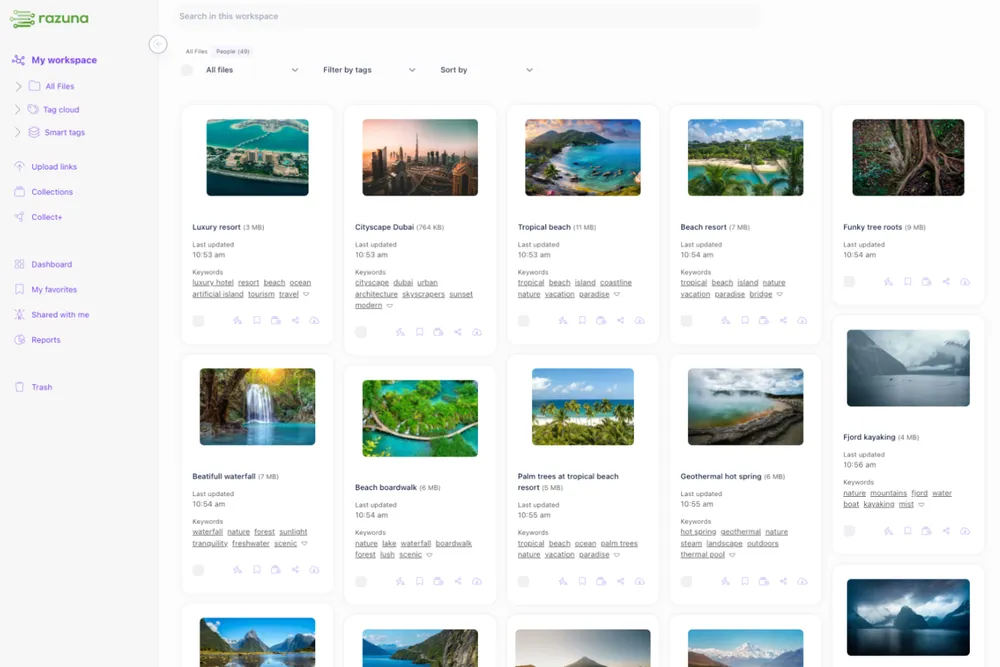
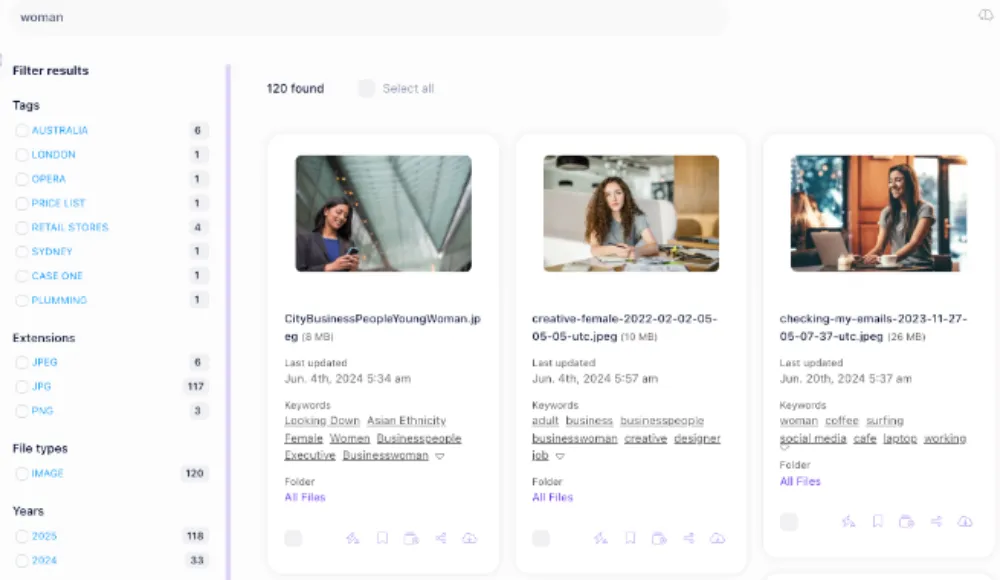
Razuna uses indexed storage backed by fast lookup mechanisms so that searching across hundreds of thousands of assets returns results in seconds. When you search for a specific logo version or a product shot from last quarter, the system does not scan every file. It resolves your query through index structures that mirror the principles of direct access.
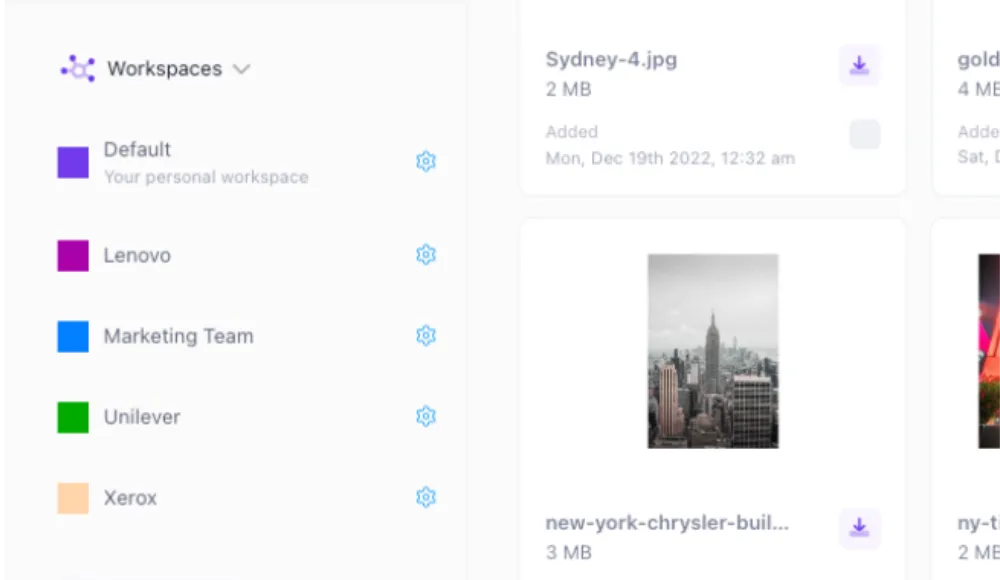
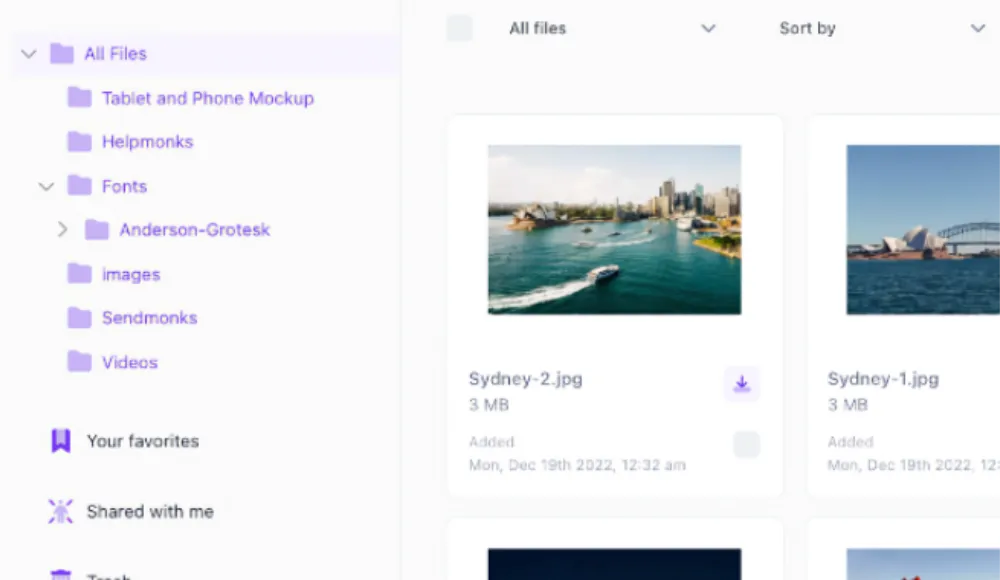
Beyond speed, modern DAM systems solve the organizational problems that raw direct access storage cannot handle on its own. Metadata tagging, version control, permission systems, and folder structures sit on top of the underlying storage to give teams the context they need to find and use assets effectively. You can explore how this works in practice on the Razuna features page.
Practical Takeaways for Teams Managing Files at Scale
Whether you are a developer evaluating file system design or a marketing operations manager choosing a digital asset management platform, the principles behind direct access file organization are directly relevant.
Know your access pattern before choosing a storage approach. If your primary need is fast lookup by a unique identifier, direct access is the right foundation. If you need sorted reporting across all records, sequential or indexed sequential is more efficient. Most production systems combine both approaches to handle different query types.
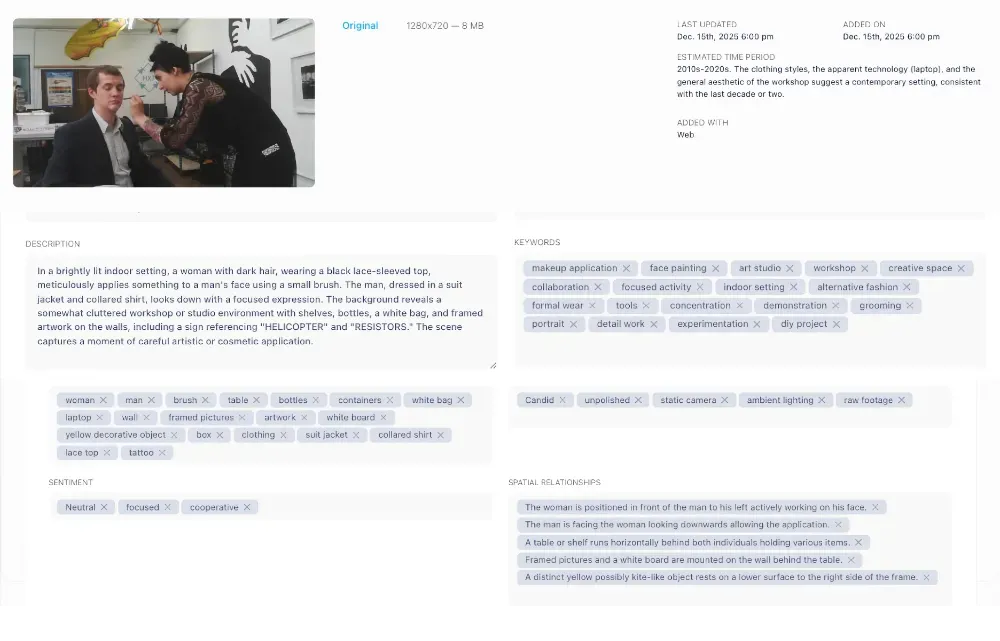
Metadata is what makes direct access useful to humans. Hashing a record key is fast, but humans do not think in storage addresses. Good file and asset management systems layer rich metadata on top of fast-access storage so that retrieval is both fast for the machine and intuitive for the person. The Razuna blog covers how teams can structure metadata strategies to get full value from their DAM.
Concurrent access matters at any scale. When ten designers are pulling assets simultaneously, when a marketing automation tool is querying files while a campaign manager reviews a folder, the system must handle concurrent reads and writes without corruption or bottleneck. Direct access architecture supports this natively; sequential systems typically do not.
Summary
Direct access file organization is fast, flexible, and built for concurrent use. Those advantages make it the foundation of most production database and file storage systems in use today. The trade-offs, storage waste from pre-allocation, collision handling complexity, and poor fit for sorted batch processing, are real and require design attention.
For most teams managing files at scale today, the choice is not between sequential and direct access at the raw storage level. It is about choosing a platform that has already solved these trade-offs intelligently, layered the right metadata structures on top, and delivered a search and retrieval experience that works for people, not just for machines.
If your team is outgrowing simple folder structures and shared drives, exploring a dedicated digital asset management solution is the natural next step. See how Razuna handles file organization and retrieval at scale to understand what a modern system looks like in practice.
For practical ways to organize and find assets, see Organizing Digital Media Assets: 9 Practical Strategies and Metadata Debt in DAM: Why Marketing Teams Keep Losing Assets They Already Own.