AI Content Governance for Marketing Teams: How to Stop Shadow AI From Wrecking Your Brand

AI content governance stops being theoretical the second your team starts generating real campaign assets in random tools. A designer makes a hero image in one app. A marketer rewrites copy in another. Sales builds a localized deck with whatever files they can find. Then everyone acts surprised when the brand starts drifting.
That is the real problem. AI did not break your brand on its own. It revealed that most teams still govern content with a mix of folders, tribal knowledge, and crossed fingers. If the approved asset, the latest version, the usage rule, and the proof of origin do not live in one governed system, speed just creates a mess faster.
CMSWire recently put it bluntly: AI broke content governance. Fair. But the fix is not another policy PDF nobody reads. The fix is operational. AI content governance requires a single source of truth, and for marketing teams, that source should be the DAM.
Razuna has already written about adjacent parts of this shift, from content provenance and C2PA to brand governance through access control. The missing piece is how those ideas come together in daily production. That is where most teams are still leaking time and trust.
Why AI content governance is now a marketing ops problem
Most governance conversations still sound like compliance workshops. That is too slow and too abstract. Marketing teams do not wake up asking for governance. They wake up asking why the wrong product image made it into a regional launch, why legal is chasing down AI-generated visuals after the campaign is live, or why agencies keep downloading assets nobody approved.
AI content governance matters because AI multiplies the volume of assets. That is the whole point of using it. More ad variants. More social cuts. More landing page graphics. More language versions. More experimentation. Useful, yes. Safe, only if the system around it is built for that volume.
Without a DAM at the center, teams often develop four bad habits. They save AI output to personal folders. They reuse prompt outputs without recording their sources. They mix draft assets with approved ones. They push files downstream before anyone can tell whether the content is on-brand, rights-cleared, or even current.
That is why AI content governance is not just an ethics or legal issue. It is a production issue. If your review logic lives outside the place where people search, download, and share files, it gets bypassed. Every time.
AI content governance needs a source of truth, not another checklist
A checklist helps once. A source of truth helps every day. That is the dividing line.
Good AI content governance starts by separating raw generation from approved use. The moment an image, video, document, or graphic enters the workflow, the system should make its status obvious. Draft. In review. Approved. Restricted. Expired. If a user has to ask in chat whether a file is safe, the system has already failed.
This is where DAM does real work. It centralizes the asset, metadata, version history, permissions, and review trail in one place. That means a regional marketer is not guessing whether the latest AI-assisted banner is final. The answer is attached to the asset.
It also means your team can stop treating AI output like normal finished content. It is not. AI-generated and AI-assisted assets need extra context. Where did this come from? Which model or tool created it? Was it edited after approval? Does it require disclosure? Is it cleared for paid media? Does the underlying source material carry rights restrictions? Those are governance questions, but they belong inside the file workflow.
If you want a practical benchmark, look at your current search experience. Can someone filter for approved AI assets only? Can they exclude expired variants? Can they see provenance or usage notes before download? If not, your AI content governance is happening in theory, not in operations.
The five controls every AI content governance workflow should have
You do not need an enterprise committee to get this right. You need five controls that are visible, boring, and hard to ignore.
First, asset status. Every AI-generated asset should have a plain language state. Draft. Under review. Approved. Restricted. Archived. No vague labels. No hidden comments.
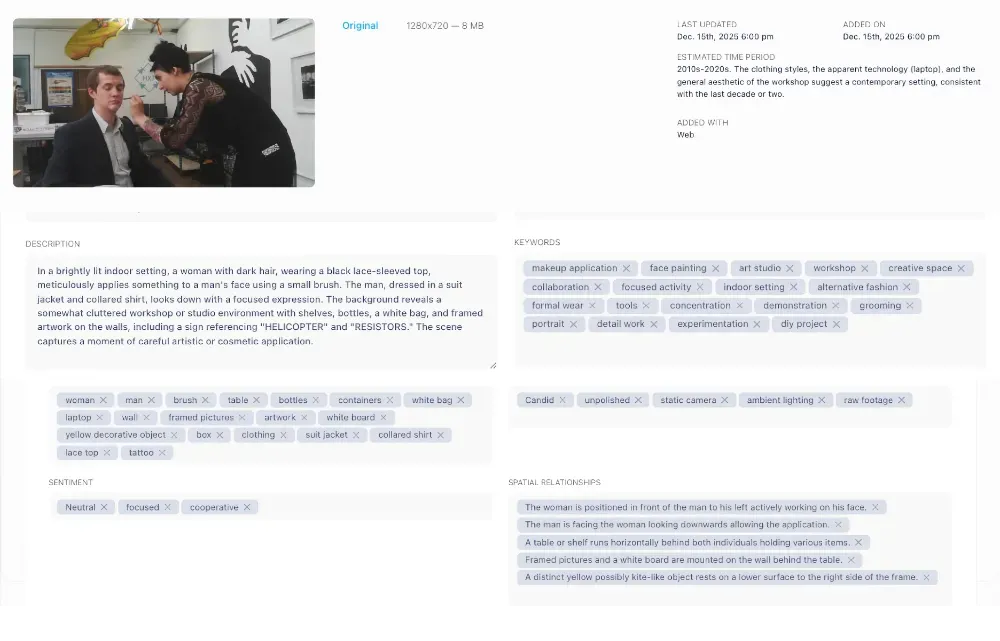
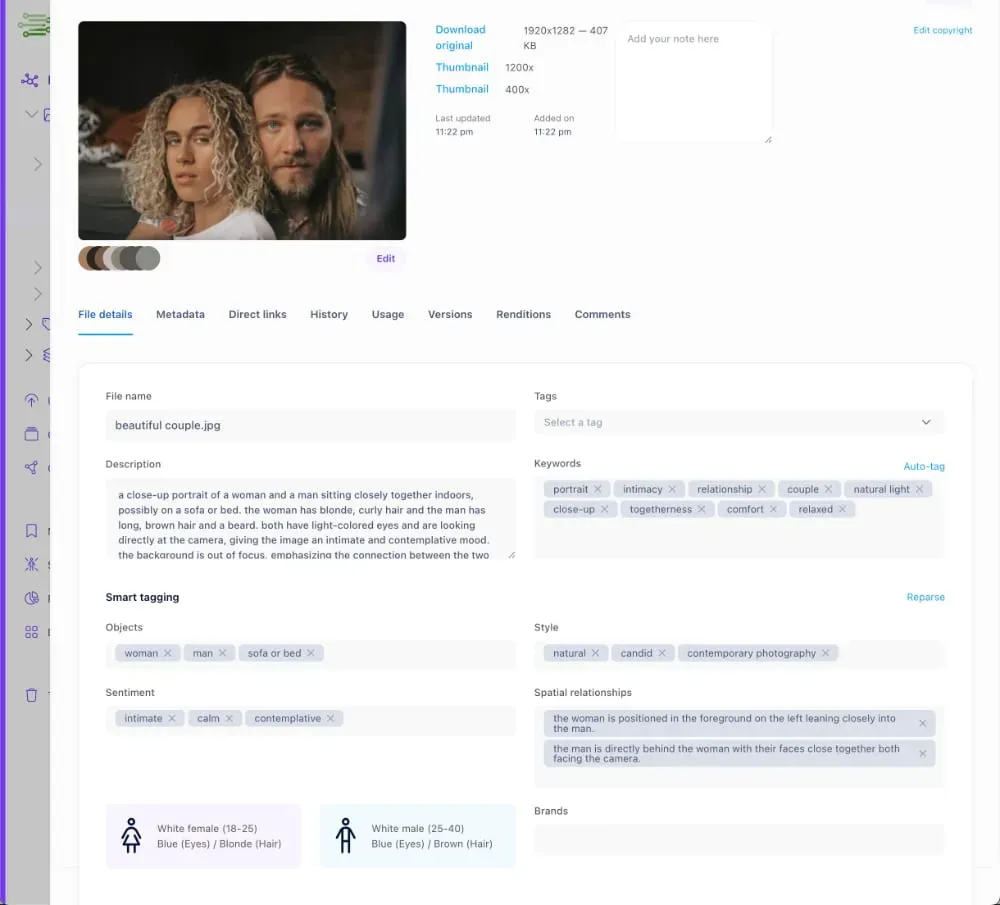
Second, provenance metadata. At a minimum, record whether the asset is AI-generated, AI-assisted, or human-created, plus the tool or model if that matters to your process. This is where the link between AI content governance and provenance gets real, not philosophical.
Third, permissions and audience controls. A draft concept image might be fine for internal ideation and totally wrong for external use. Agencies, sales, and regional teams should not see the same universe of assets if some of those assets are not cleared.
Fourth, version control. AI turns one base asset into ten variants in a hurry. Without a version history, your team will publish old copies and call it a communication issue. It is a system issue.
Fifth, expiration and review triggers. Some assets need periodic checks because claims change, campaigns end, products evolve, or disclosure rules tighten. Governance breaks when approval is treated like a forever stamp.
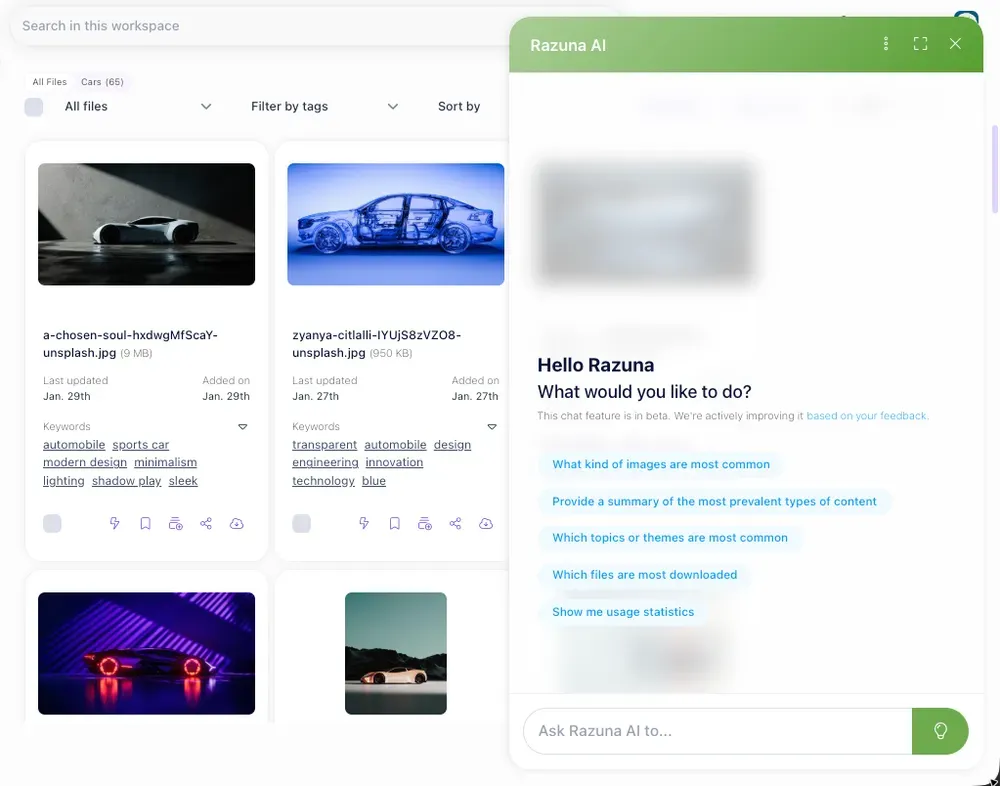
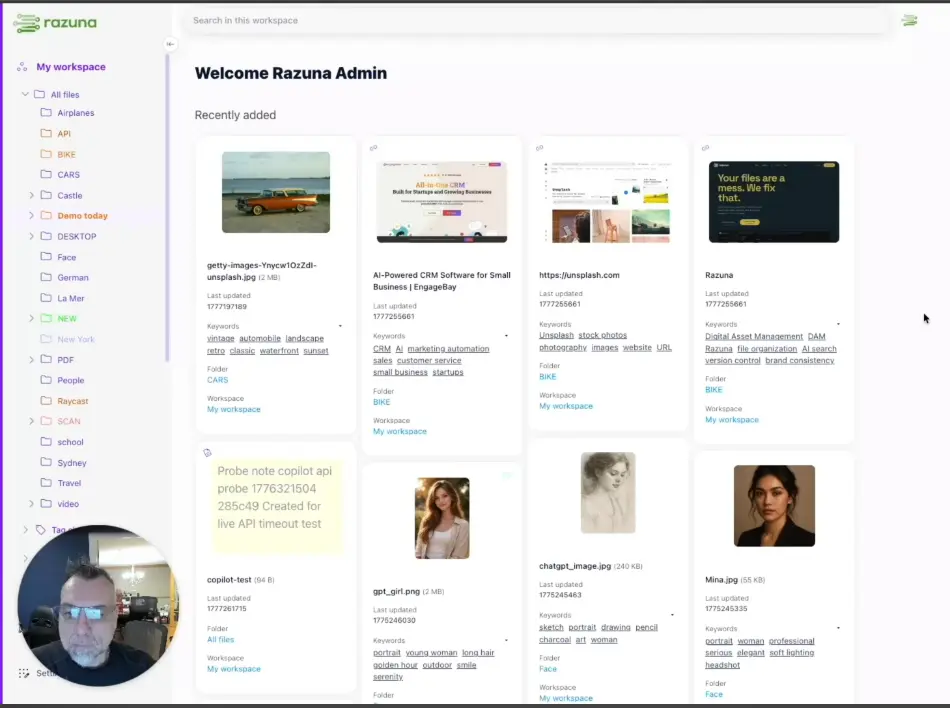
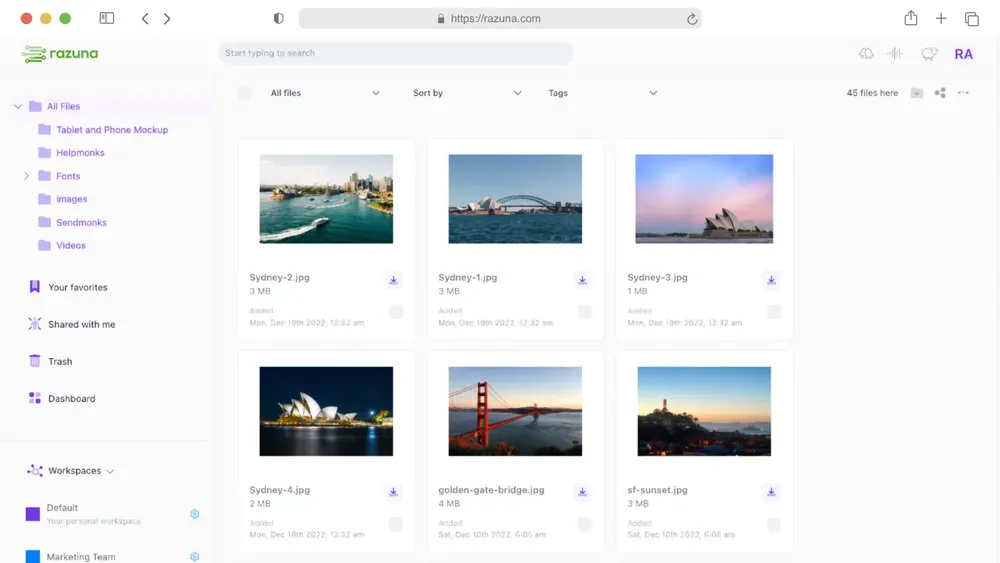
Razuna already provides teams with the core building blocks for this: metadata structure, permissions, versioning, portals, and fast search from a single controlled library. If you are comparing fit, look at Razuna pricing and the main product story at Why Razuna. The important part is not the feature list in isolation. It is whether the system makes the safe path easier than the sloppy path.
Why shadow AI keeps winning when governance lives outside the DAM
Shadow AI is just shadow IT with prettier pictures. People use it because it is fast and because the approved route often feels annoying.
That is the uncomfortable part. When teams bypass governance, it is usually not rebellion. It is convenient. If governed assets live in one place, approvals live in another, and brand guidance lives in a forgotten slide deck, people will choose the shortest path. They are on deadline. They are not writing a governance manifesto.
So the goal is not to lecture people into better behavior. The goal is to remove the excuse. A working DAM setup makes approved assets easier to find than random local files. It makes usage rules visible before download. It gives agencies and partners access to the right subset rather than the entire attic. It keeps expired or restricted content from floating to the top of the search.
This is why AI content governance fails so often in companies that do have written policies. The policy says one thing. The workflow nudges people the other way. Tools win. Defaults win. Search results win. If the DAM is not the place where work actually flows through, the policy becomes decoration.
What AI content governance looks like when it is actually working
A healthy setup feels almost boring. That is a good sign.
A campaign manager searches for product launch visuals and sees approved assets first, with drafts excluded by default. A designer can trace whether an image was AI-generated or edited from a licensed source file. A regional team can pull localized assets without accidentally using unapproved master files. An agency portal exposes the right material and hides the junk. Nobody needs a detective story just to ship a landing page.
That is also when governance stops feeling like a source of friction. Good AI content governance does not add extra meetings. It removes rework. It cuts back and forth over file status. It prevents the classic mess where one team publishes a clever variation and three other teams copy it before anyone notices that the claims have changed or that the asset was never cleared.
It also protects reuse, which is where DAM earns its keep. Most teams talk about AI as a creation engine. Fine. But the bigger compounding value often comes from governed reuse. Once a strong asset is approved, tagged, contextualized, and easy to find, the next campaign gets faster. That only happens when the asset stays attached to its rules.
Stop treating AI content governance like a side project
This is the mistake underneath most of the chaos. Teams treat AI content governance like a side project for later, after the pilot, after the campaign, after legal reviews, the process, after someone has time. By then, the habits are already set.
The better move is simpler. Put the DAM in the middle early. Decide what metadata every AI asset needs. Decide which statuses matter. Decide who can approve what. Decide what becomes visible to agencies, partners, and regional teams. Then make those rules part of the normal asset flow, not a separate ceremony.
If your team is producing more AI-assisted content every month, you do not need a longer policy. You need a tighter operating model. Start with the library. Start with a search. Start with permissions. Start with provenance. That is where AI content governance becomes real.
If you want one place to regain control, start with Razuna. Centralize the files, attach the context that matters, and make approved assets the easiest assets to use. That is how you keep AI fast without letting the brand go sideways.