AI Agents in Your DAM: The Shift from Smart Storage to Autonomous Workflows
Your DAM has auto-tagging. Maybe AI-powered search. Perhaps a smart metadata extractor baked into the upload flow. That is useful. But it is also table stakes now. The shift happening across marketing operations right now is much bigger: AI digital asset management is moving from features bolted onto storage to agents that take action on your behalf.
The difference matters more than most vendors are willing to admit.
What AI Agents Actually Do in a DAM
An AI feature reacts. It waits for you to upload a file, then suggests tags. An AI agent acts. It monitors, decides, and executes without waiting to be asked.
In the context of digital asset management, that means:
- Watching an ingest queue and automatically enriching every incoming asset with metadata, usage rights data, and channel-readiness scores
- Scanning your entire library for assets approaching rights expiration and opening tasks or alerts before anything goes live illegally
- Detecting when a campaign brief changes and flagging assets in the active library that no longer match the brief specs
- Generating size and format variants for every approved asset the moment it clears review
- Tracking how assets perform across channels and feeding that data back into content planning
None of this requires a human to click anything. That is the point.
Four Use Cases Where AI Agents Are Already Replacing Manual Work
admit
1. Ingestion and Enrichment
Getting assets into a DAM has always been the unglamorous part of the job. Upload, tag, categorize, check for duplicates, and set permissions. Multiply that by a thousand files a week, and you have a serious operational bottleneck.
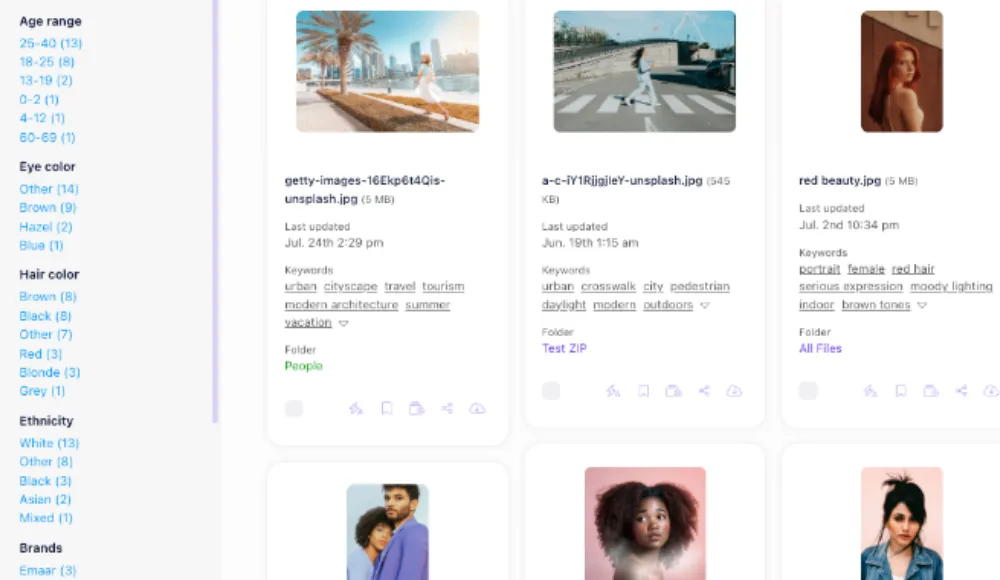
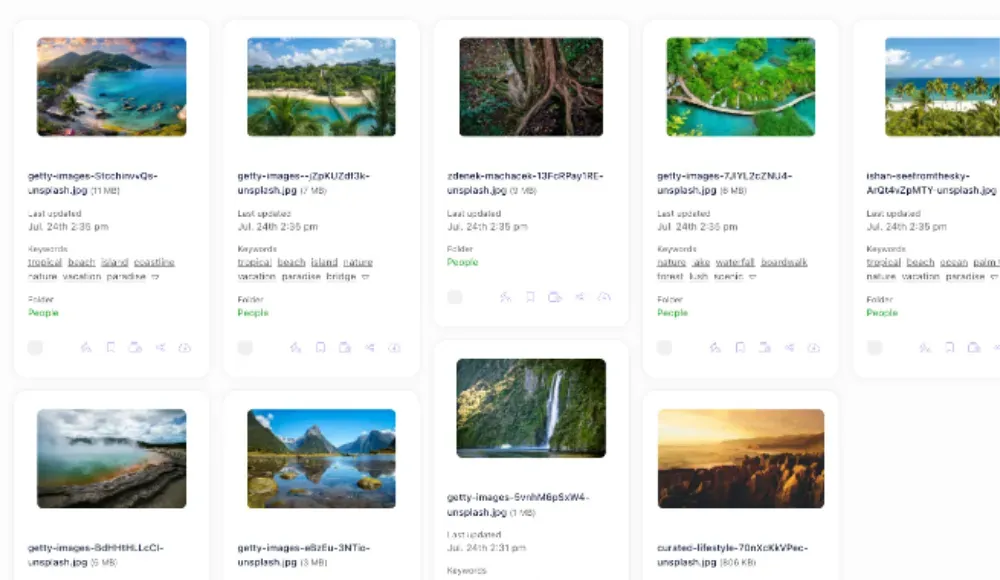
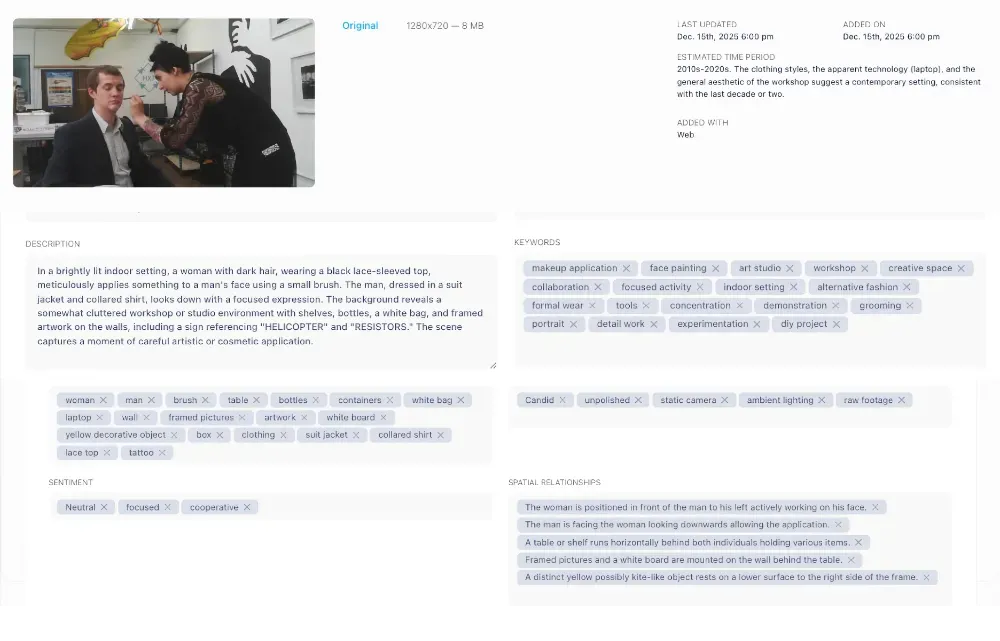
AI agents handle this by processing assets on arrival. Object recognition, color palette extraction, sentiment scoring, subject classification, and even transcription for video files. The asset lands in the library already tagged, already categorized, already searchable. Teams that have deployed this report cut ingest time by 70% or more. The hours that used to go to manual tagging go to actual creative work instead.
2. Rights and Compliance Monitoring
Rights management is where expensive mistakes happen. A licensed photo runs past its expiration date. A contracted talent asset gets used in a market it was not cleared for. A product image shows a discontinued item that was quietly pulled for safety reasons.
AI agents continuously monitor for all of this. They cross-reference asset metadata against rights databases, brand guidelines, and product status feeds. When something is out of compliance, they flag it, quarantine the asset, or create a task for review, depending on how you have configured the workflow. No weekly audits. No spreadsheet-driven rights tracking. No embarrassing legal notices.
3. Cross-Channel Asset Adaptation
A creative team produces a hero image for a campaign. It needs to run as a LinkedIn banner, an Instagram Story, a Google Display ad, a website hero, and a retargeted display variant. That is a minimum of five formats, each with different dimensions and often different copy treatments.
AI agents take the approved master asset and automatically generate all required variants, applying brand-safe cropping rules and the channel specs you have defined. Output goes to a review queue rather than straight to publication, so a human still checks before anything goes live. But the hours of manual resizing are gone.
4. Usage Analytics and Content Intelligence
Most DAM platforms tell you which assets exist. Fewer tell you which assets are actually working. AI agents close that gap by connecting asset usage data with campaign performance metrics, identifying which content types drive results for which audience segments, and surfacing patterns that human analysts would take weeks to find.
The output is not just a dashboard. It is recommendations: these asset types outperform in this channel, these templates drive higher click-through, this category of content is underrepresented in the active library. That kind of signal changes what gets briefed and produced next quarter.
What This Means for Marketing Teams
The honest framing is this: AI agents do not replace marketing teams. They replace the parts of marketing operations that nobody actually wanted to do. The tagging, the resizing, the rights-audit spreadsheet, the weekly DAM cleanup session.
What comes out the other side is a team that spends less time managing assets and more time making decisions about them. That is a meaningful difference when you are running a team of five trying to produce content at the volume a team of twenty would have handled five years ago.
There is also a compounding quality effect. When metadata is consistently accurate and rights are continuously monitored, the library stays clean. Clean libraries get used. Assets that took budget and creative effort to produce actually show up in campaigns instead of getting lost because nobody tagged them correctly in the first place.
Forrester has written about this shift. So have Aprimo, Bynder, and Fotoware. The consensus is the same: agentic workflows in DAM are no longer experimental. They are entering standard practice for teams managing assets at scale.
How Razuna Fits Into This
Razuna was built around the idea that mid-market teams should not need enterprise budgets to get enterprise-grade asset management. That same thinking applies to AI.
The practical reality for most marketing teams is that they are not running hundred-person operations with dedicated DAM administrators. They need systems that work without constant maintenance, workflows that run without daily oversight, and AI that handles the operational load without requiring a six-month implementation project.
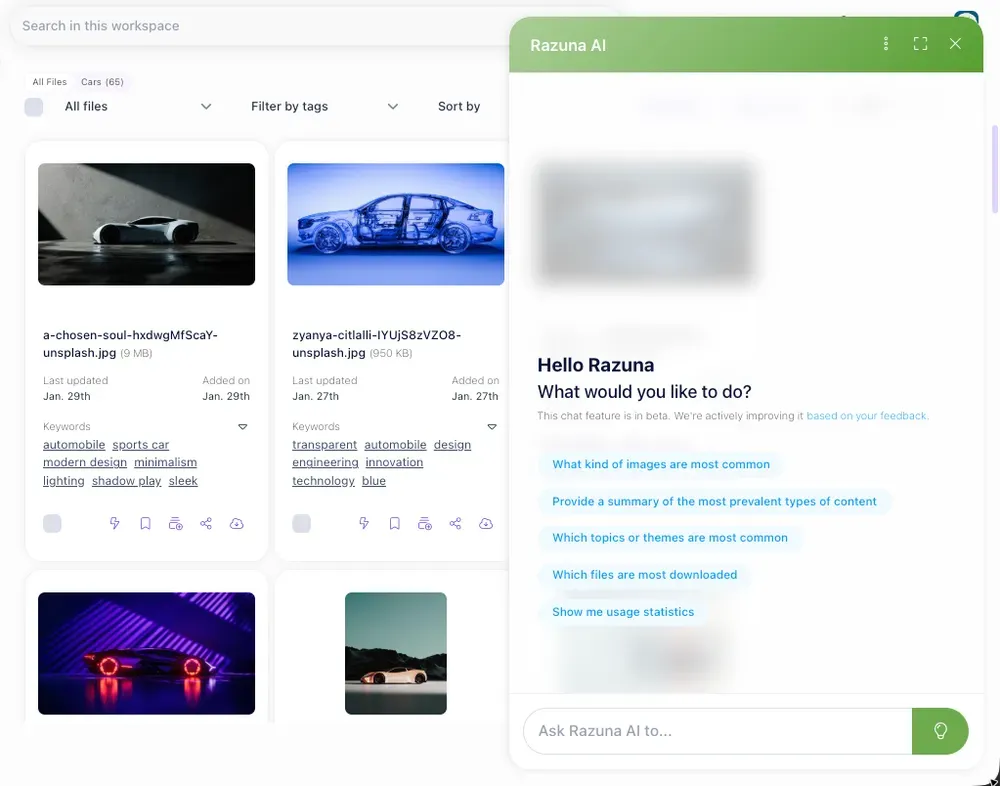
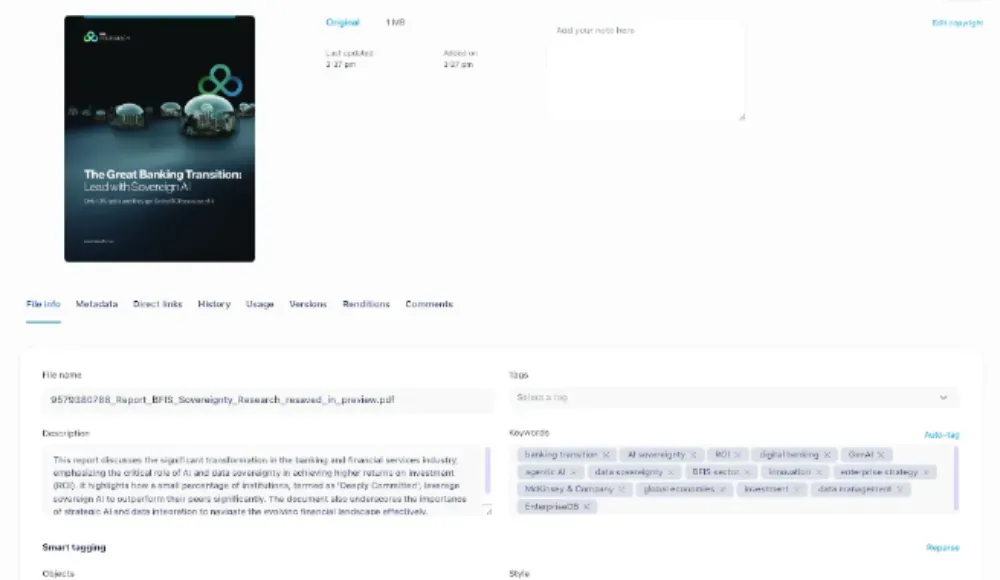
Razuna's AI-powered features enable auto-tagging, which uses the same infrastructure that powers rights monitoring and cross-channel adaptation and forms the foundation for the agentic workflows described above.
And Razuna's pricing model is designed so that accessing these capabilities does not require a procurement committee.
The direction is clear: DAM systems that still require teams to do manually what an agent could handle automatically are going to create competitive disadvantages for the teams running them. The question is not whether to move toward agentic workflows. It is how fast.
What is AI Digital Asset Management?
AI digital asset management is the use of artificial intelligence to automate the storage, organization, enrichment, and distribution of digital files within a DAM platform. Modern AI DAM systems go beyond simple auto-tagging to include agentic workflows that handle rights monitoring, format adaptation, compliance checking, and usage analytics without manual intervention. This approach reduces operational overhead for marketing teams while improving the accuracy and usability of their asset libraries.
Frequently Asked Questions
What is the difference between an AI feature in a DAM and an AI agent?
An AI feature in a DAM responds to user actions, like suggesting tags after an upload. An AI agent operates continuously and independently, monitoring the library, taking actions based on predefined rules, and completing tasks without waiting for a human to initiate them. The distinction matters because agents handle ongoing operational work while features only assist with individual user tasks.
Can AI agents in a DAM automatically handle rights and compliance monitoring?
Yes. AI agents can continuously cross-reference asset metadata against rights databases, expiration dates, talent contracts, and product status feeds. When an asset approaches a rights expiry or is used outside its cleared territory, the agent can automatically flag it, quarantine it, or create a review task. This removes the need for periodic manual audits.
How does AI digital asset management improve creative team productivity?
By handling the operational tasks that previously required manual effort, including tagging, metadata enrichment, format resizing, and rights checking, AI DAM systems free creative teams to focus on strategy and production. Teams consistently report significant reductions in time spent on DAM administration after deploying agentic workflows.
Is AI-powered DAM only practical for large enterprises?
No. While early AI DAM capabilities were primarily available in enterprise platforms, mid-market solutions like Razuna now offer AI-powered features at pricing accessible to smaller teams. The core benefits, consistent metadata, automated workflows, and rights monitoring, are as valuable for a five-person marketing team as for a hundred-person operation.
What types of assets benefit most from AI agent workflows in a DAM?
High-volume asset types benefit most: product photography, campaign images, video content, and brand templates. These assets require consistent metadata, regular format adaptation for different channels, and ongoing rights management. AI agents handle all three systematically, which is where the time savings are most significant.
Ready to See What AI Can Do for Your Asset Library?
If your team is still spending hours on manual tagging, rights tracking, or asset resizing, you are working harder than you need to. Try Razuna free and see how AI digital asset management works in practice.